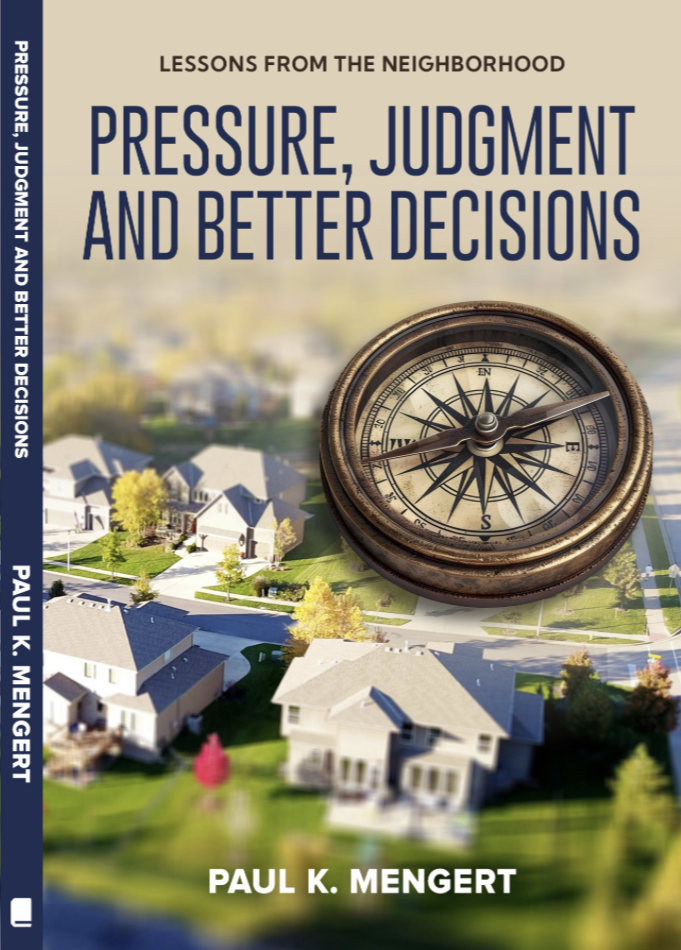
Lessons from the Neighborhood
Real-world governance insights drawn from the everyday decisions faced by community association boards, managers, and professionals. These short narratives reflect the intersection of leadership, fiduciary duty, and the realities of shared community living.
Want to be among the first to receive early access, sample chapters, and practical insights from the series?
Lesson from the Neighborhood: The Case of the Second-Floor Sanctuary
The board thought they were being compassionate. The auditor thought they were making an unsecured loan. In the upscale condominium community of Highland Terrace, the board prided itself on being a family. The board president, David, was a retired educator who believed strongly that communities were defined by compassion. Residents appreciated his warmth. He listened. He cared.
And then the situation in Unit 204 occurred. Mrs. Gable, a long-time resident, suffered a serious medical emergency. Her son contacted David and explained that her financial accounts had been frozen while the courts sorted out a guardianship matter. As a result, she could not pay her monthly assessments.
David didn’t see a delinquency. He saw a neighbor in distress. Quietly, he instructed the property manager: “Don’t send collection notices. Don’t add late fees. We’ll wait until this is resolved.” No board vote. No documentation. No plan. Just compassion. For several months, Unit 204 remained quietly delinquent. Nothing escalated. No one complained. In many communities, that’s where the story would have ended. But this one had an audit.
When the CPA completed the annual financial review, a $14,000 delinquent account surfaced on the ledger. That number doesn’t stay quiet for long—especially in a community with financially- sophisticated owners. One of them, a corporate attorney, asked a simple question that changed the tone immediately: “On what authority did the board extend what amounts to an unsecured loan to a homeowner?”
That’s when the room shifted. Because that’s exactly what had happened. Not intentionally. Not maliciously. But structurally, the board had allowed one owner to accumulate a significant balance without formal action, documentation, or protection for the association. Good intentions had created real exposure.
I’ve seen this play out more than once. It rarely starts as a governance failure. It starts as a human decision made quietly, without process, because the situation feels exceptional. And exceptional situations are where discipline matters most. At that point, the board brought in a new treasurer, Eleanor. She didn’t undo the compassion. She formalized it.
First, the board moved the discussion into executive session to protect the owner’s privacy. Procedures vary by jurisdiction, so it’s important to confirm with legal counsel as needed. Second, documentation was obtained confirming the guardianship proceedings. Third, the association’s attorney prepared a formal payment agreement. Late fees were conditionally suspended, but only within a defined structure tied to repayment once funds were released. Finally, a lien was filed against the property. Not as punishment--as protection. Because the association doesn’t just represent one homeowner. It represents all of them.
Once the arrangement was documented properly, the legal concerns faded. The tension eased. The community stabilized. But the lesson stayed. The problem wasn’t compassion. It was undocumented compassion.
In community associations, boards are often forced to navigate the space between empathy and obligation. That space is not theoretical. It shows up in real time, in real situations, involving people you
may know personally. Here’s the rub: When boards step outside established procedures—even for the right reasons—they don’t eliminate risk. They relocate it. From the moment, to the future. From the individual, to the community. From intent, to liability.
Compassion is not the problem. But compassion without structure is not leadership. It’s exposure.
Continue the Conversation
Situations like this happen more often than most boards expect—and they rarely feel clear in the moment.
If you serve on a board, manage communities, or advise associations, this is the kind of decision that defines long-term stability.
More lessons like this appear throughout Lessons from the Neighborhood, where real-world governance meets the realities boards actually face.
Leadership Takeaway
Strong boards do not choose between compassion and discipline. They integrate the two.
Most governing documents and statutory frameworks allow boards some flexibility in handling unique circumstances. But that flexibility is meant to be exercised through process—documented decisions, legal guidance where appropriate, and consistent application of fiduciary duty.
This board chose an approach it believed was appropriate for its community. In other situations, a board may reasonably reach a different conclusion.
Here’s the situation:
Compassion does not eliminate the obligation to assess risk.
Boards must still evaluate factors such as the likelihood of recovery, the equity position of the property, and whether delay could impair the association’s ability to collect. In some cases, fiduciary duty may require more immediate or formal collection action, even when the circumstances are difficult.
When boards formalize exceptions, they protect both the individual in need and the community as a whole.
When they don’t, they risk both.